4 Million and Beyond
We have just reached a huge milestone – 4 million classifications! What does that mean? To make a HiRISE image manageable, the Zooniverse team cut the images up into sub-images, called cutouts. Fans and blotches are identified in each cutout, and when a cutout has been viewed 100 times it is retired.
Four million… I am still amazed at the investment of your time that this represents. I am humbled that you all have invested your free time in this project, a bit of Mars science that delights and fascinates us by its alien nature. I hope that you have enjoyed doing this, enjoyed the pleasure of looking at this unearthly terrain.
On Mars today it is autumn in the southern hemisphere. The CO2 (carbon dioxide) is freezing and/or snowing onto the surface. Over the winter it will anneal into a sheet of translucent slab ice. In a little less than one earth year it will be spring in the southern hemisphere of Mars and we will start our 5th year of observations. Fans will pop out from under the ice like Martian crocuses. Will they be in the same place? Will the winds be stronger or weaker? Will we see any permanent changes in the surface or just the ephemeral seasonal activity?
With your continued efforts we’ll be able to detect long-term trends. As soon as our current collection of cutouts has been analyzed we will add the images from our 4th year of observations. Then we’ll add the 5th year.
Four million… You are awesome!
Candy Hansen
Planet Four Principal Investigator
Exploring More With the Images on Planet Four
We’ve added some new features in the past few months, to help make it easier for you to further explore the HiRISE images that you’re classifying on http://www.planetfour.org, and I thought I’d spend a blog post highlighting them. The full HiRISE frames are quite large (typically 2024 pixels in width and 20,000 pixels in height) and to show on the main site we divide them into smaller overlapping cutouts that we ask you to mark fans and blotches in. For each cutout, you can use our discussion Tool (Planet Four Talk), to talk about interesting features you’re seeing, and it is through Talk that can you access the site’s new features.
After you’ve marked the fans and blotches (if any) for the image presented on Planet Four and hit the ‘Finish’ button, you’ll see the ‘Next’ button and below it the ‘Discuss’ button appear. If you hit Discuss, it will take to you to the cutout’s dedicated page on Talk (Here’s an example for cutout APF0000zcd). This is where you can add 140 character comments about the image as well as start longer discussions about questions you have or thoughts and theories with other members of the Planet Four community and the science team.
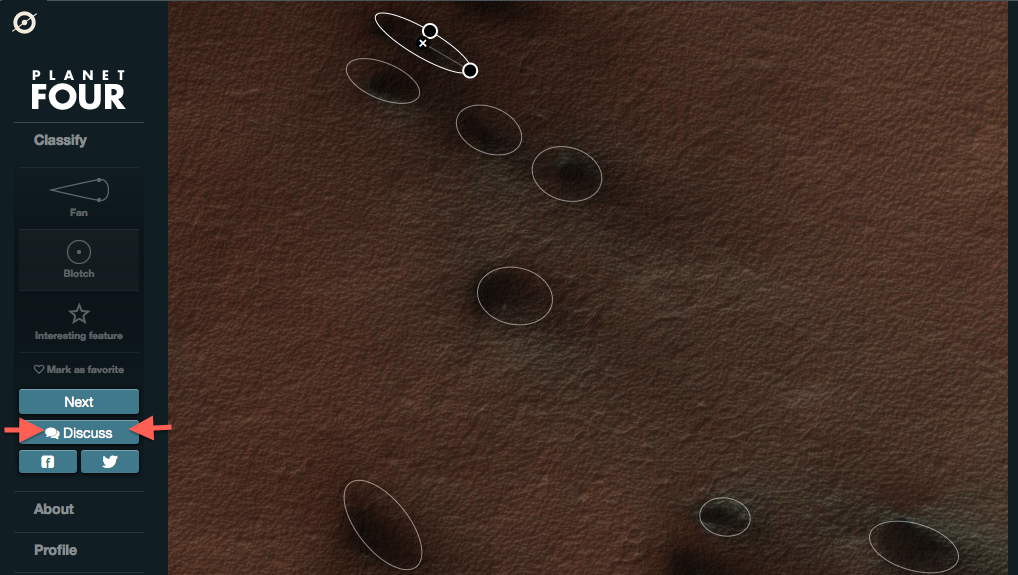
Click on Discuss after hitting the Finnish button in the main interface and it will take you to the Talk page for this cutout
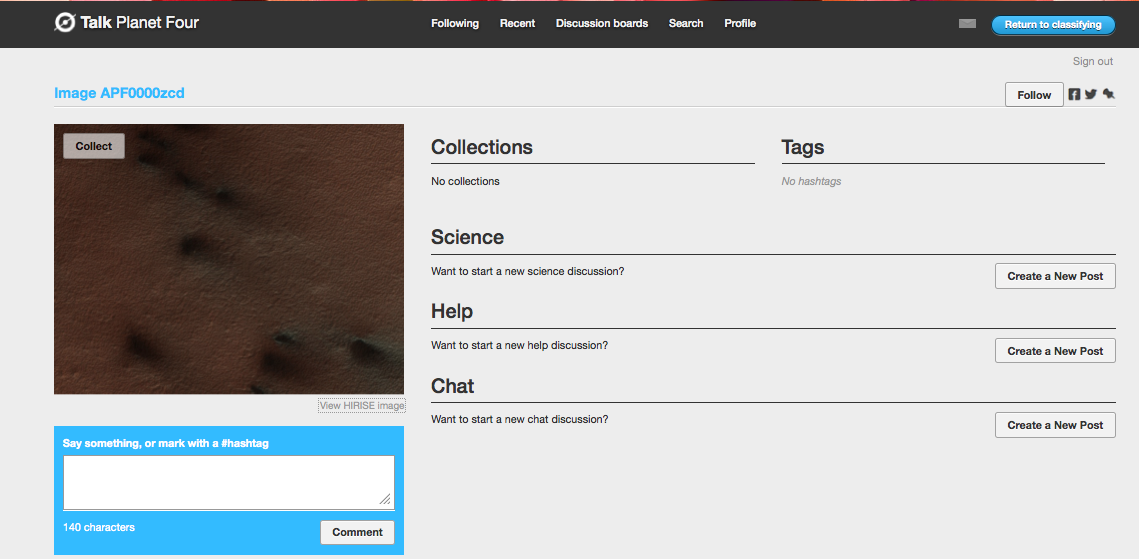
Talk page
While on the Talk specific page for the cutout, if you see a feature you want to examine in more detail, place your mouse over the image. We have added a magnifying glass tool that will appear on the right with a zoomed in version of the image (see below).
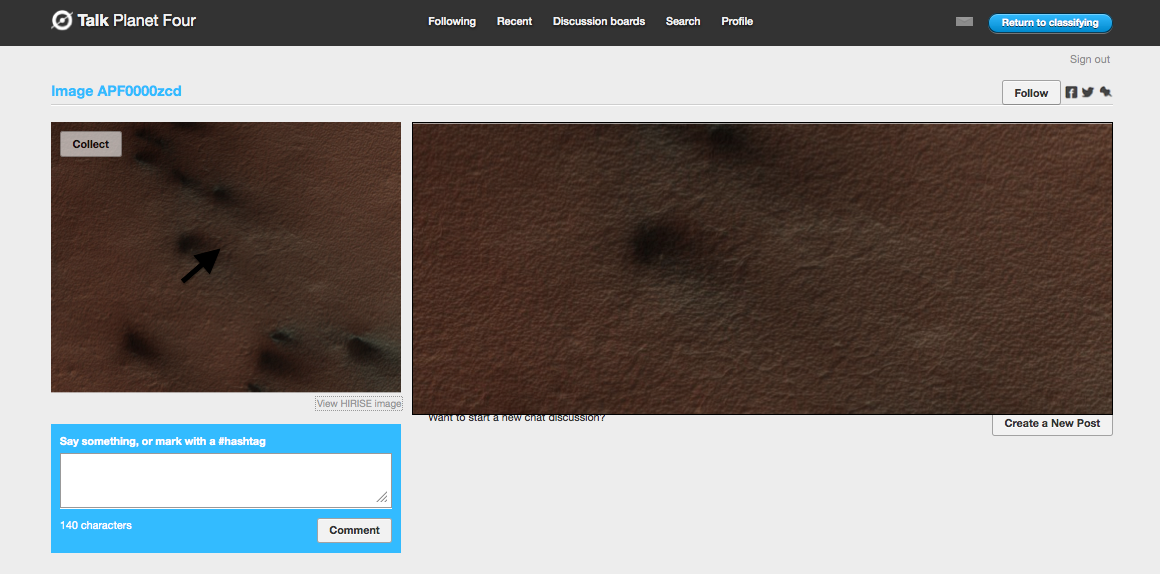
Magnifying glass feature in Talk. Move your mouse over the spot in the image you want to see enlarged
In addition, we’ve added links on Talk to the original HiRISE image (hosted on the HiRISE website) that the cutout you examined is derived from (for an example here’s the page for APF0000zcd). Click on the View HIRISE image link below the image on Talk. From there, you’ll be directed to the HiRISE website, where you can download the full frame observation (we currently use the RGB color non-map projected images) as well as find links to observations taken close to the area over the past 4 Martian monitoring seasons (just scroll to the bottom of the page).
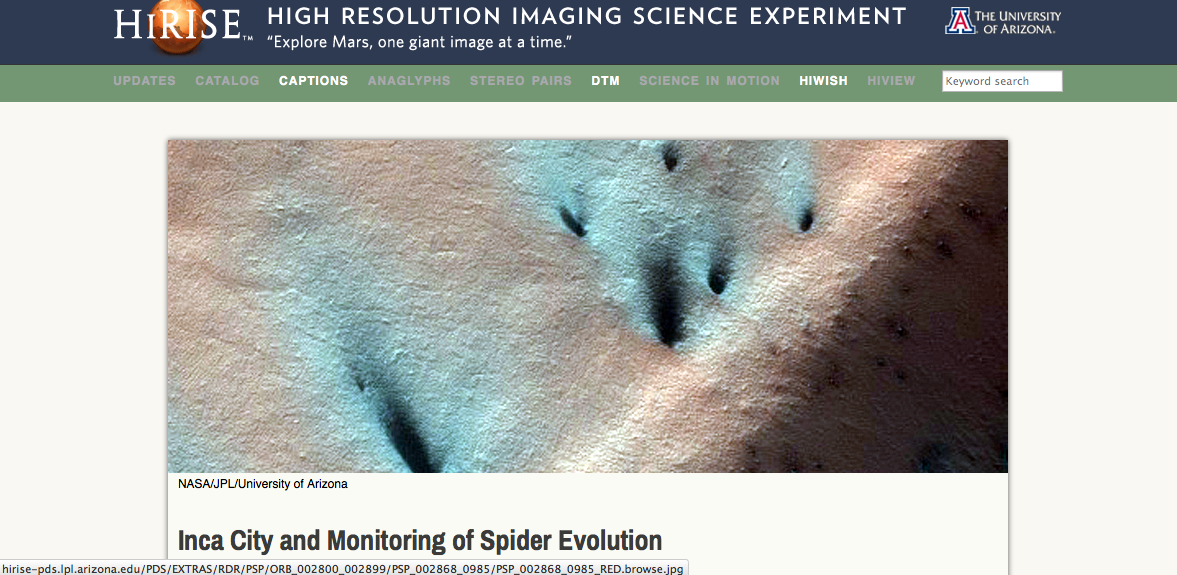
HiRISE website page for full frame image that APF0000zcd is derived from
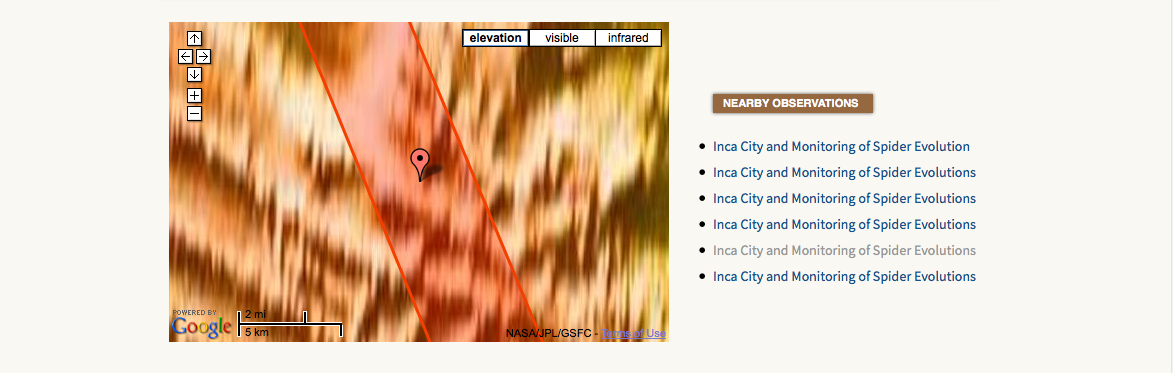
Bottom of HiRISE page with links to nearby observations
Don’t forget you can always explore Talk at any time by going to http://talk.planetfour.org/ and explore the discussions and images that other volunteers have recently classified or commented on.
ZooCon 13
Today we have a guest post from Andy Martin, one of our dedicated Planet Four Talk moderators, who attended ZooCon13 in Oxford, UK this past weekend. In a previous life as a chartered chemist, Andy tested the air at the House of Commons, assessed the quality of food, water and nuclear fuel testing, and worked on standards for breathalysers and dairy farm milking parlours. He now runs a campsite in Cornwall where there are lots more stars to stargaze at in the night sky than there were inside the M25.
And so to Oxford. Walking to the venue was a little like being outside Ikea on a Sunday afternoon. The streets were littered with parents come to transport their student offspring home for the summer, only to find they’d accumulated too much stuff to fit in the car – in one case three cars!
I’m not sure that anyone counted heads but there were around 40 delegates present with large contingents from Planet Hunters and Old Weather (some of who brought cakes). It has been a while since I was audience side of the lectern and I quickly found that I now have an ocular choice, see the presentation screen or read what I’m writing. I chose the former and thus my limitations with the latter takes the blame for any errors, omissions or inaccuracies in what follows.
The afternoon started with presentation by Aprajita Verma on the Space Warps project which looks for examples of gravitational lensing. In the simple version of this you have a star a long way off with another star in between. Instead of being obscured by the intervening star the light from the distant one gets bent around it to give two (or more) images around the middle star. In practice they are mainly looking at galaxies and the images are somewhat more complicated than the simple model would suggest. All very interesting, but why, you might ask and this is where all gets very technical. In essence these objects allow an estimate of the mass of the lensing object to be made – its a way of weighing galaxies.
The project has been very successful, 2 million images in the first week, and has around 80000 participants around 40% of which remain active. As I said the things they are looking for are very rare but the image set contains a number of control images. When you get one of these and flag the feature, up pops a little “well done” window with some information about the type of lens you just found.
Karen Masters from the University of Portsmouth gave the next presentation, highlighting some of the scientific highlights of the Galaxy Zoo project so far. Galaxy Zoo has been running since 2007, there are 200 thousand participants and to date some 40 million images have been classified. Participants are asked to locate galaxies in the images they are presented with and decide which characteristic group they belong to.
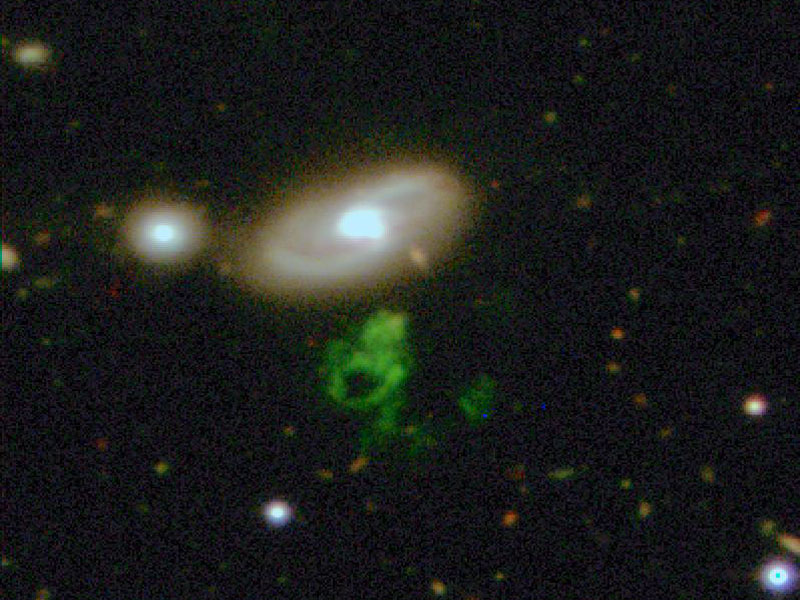
Galaxy Zoo has seen a number of published papers and scientific discoveries perhaps most celebrated being a strange object discovered amongst the images on Galaxy Zoo by a lady called Hanny who I had the pleasure of talking to later in the pub. Photos were duly taken of my amazement when she showed me her Voorwerp.
The next presentation brought us back to Earth, Phil Brohan from the Met Office gave an insight into the Old Weather project. This involves the transcription of archived ships logs from a hundred or more years ago. The logs contain details of position, pressure, temperature, wind speed/direction, extent of sea ice and more, enabling a picture to be built up of weather systems in the past. Each log contains readings taken several times a day and the archive includes logs from more than a thousand ships. This picture of historic weather can be used to compare the weather today with the past and may help to answer the question “has the weather changed?”. As an example the recent ‘super storm’ Nemo which hit the North East USA had similar weather patterns to the great blizzard of 1880 which affected the same area.
As well as the weather data the ships logs also contain information of the voyages of the vessels concerned and details of the people on them. The logs are transcribed from start to finish by the same person enabling them to follow the story of the ship and its crew. The current task is to transcribe records from the US archive which contains 75 million pages, and work is underway to include more archives in the future.
Back then to the GalaxyZoo and Brook Simmons from Oxford University who gave a taste of what the future holds for the project. The next phase will look at images taken in the infrared which will enable images from further away, and thus older, to be looked at. Current images from the Hubble telescope are able to show objects back to around half the age of the universe, the new set of images will push that back to cover around 80% of the age of the universe.
There are plans to provide online tools to make it easier to examine and work with the data and to enable more collaboration between individuals.
Following a short tea/coffee/beer we regrouped to hear from Meg Schwamb via webcam from the USA. Meg gave an update on progress with Planet Four so far and gave a tantalising glimpse of some of the first results from the analysis of the data so far; Plotting of fan/blotch position onto the surface on a larger scale.
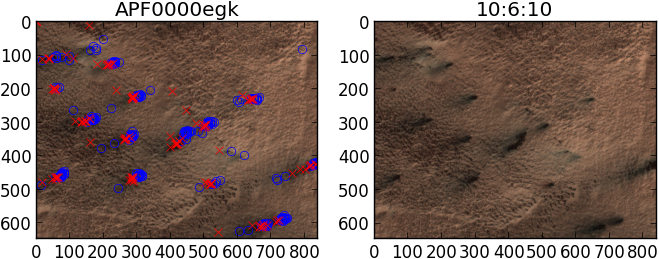
Left image: Volunteer marks overplotted. Red crosses are centers for blotches marked by Planet Four volunteers. Blue Circles are starting points of fans marked by Planet Four volunteers. Right image: Same as left but without volunteer classifications drawn
Meg mentioned the plans to look at the North in the future and discussed some of the differences that are observed between the two poles. She also showed part of this video of fan formation in the North:
Back to Earth again for the next item entitled “Only you can save planet Earth” and detailing the work of Solar Stormwatch. This project is concerned with looking at data from two cameras, one positioned slightly ahead of the earths orbit and one slightly behind which give a stereo image of the material ejected in solar mass ejections. The data from the cameras in can be combined to give an estimate of the direction and speed of the ejections and enable an early warning to be given of any activity which is headed our way. As you all probably know solar storms of this type can affect electronics, satellite communications and even the weather so any prior knowledge is of great use. The project looks at both historical data and live real time data. The historic data provides a much fuller data set than the live data but it is the patchy data in real time, which is being analysed round the clock by the people involved with the project, which can give an advanced warning of an incoming storm. Part of the presentation was a video from the cameras which shows the effect of a mass ejection on a comet, the tail is literally ripped away as the ejection front passes.
Chris Lintott was next up to talk about Planet Hunters. My notes kinda dry up here so either I was swept away by his oration or I didn’t understand a word of it – all I managed to write down was that the first exoplanet was only discovered in 1995 and the rate and number of subsequent discoveries have led to a recent estimate that there may be as many as 17 billion earth sized planets in our galaxy.
Lack of notes notwithstanding the success of the Planet Hunters project in identifying new candidates for exoplanets was clear from Chris’ presentation and particularly in finding things which have been overlooked by computers previously. Part of the current data are a set of images which are felt to contain the best bets for exoplanets – the message being if you want to find a planet now’s the time to go look.
Many of the systems found to date are somewhat strange by comparison to our home system with many systems containing 2, 3 or 4 suns, and planets of similar sizes to those in our solar system have been identified including a many which fall into the category of “Earth like”, at least so far as size goes.
The bad news is that the Kepler spacecraft which has provided much of the data for the project is now on its last legs. The good news is that another space mission is planned, there is still a huge amount of data from Kepler to be examined and other teams looking for exoplanets are keen to harness the power of the Zooniverse.
To finish the day Rob Simpson gave us a snapshot of what the future holds for the Zooniverse. He started by comparing the billions of hours spent watching TV with the 100 million hours that Wikipedia has taken to put together. The TV box filled the screen, Wikipedia just a small box by the side. By comparison Zooniverse currently attracts 2 months of effort every day, small by comparison but how much better do you all feel for it?
This image below shows the relative ‘size’ of the various Zooniverse projects over the past year. Rob has recently written a post for the Zooniverse blog about how the human effort for the last year is divided by project and how he calculated it.
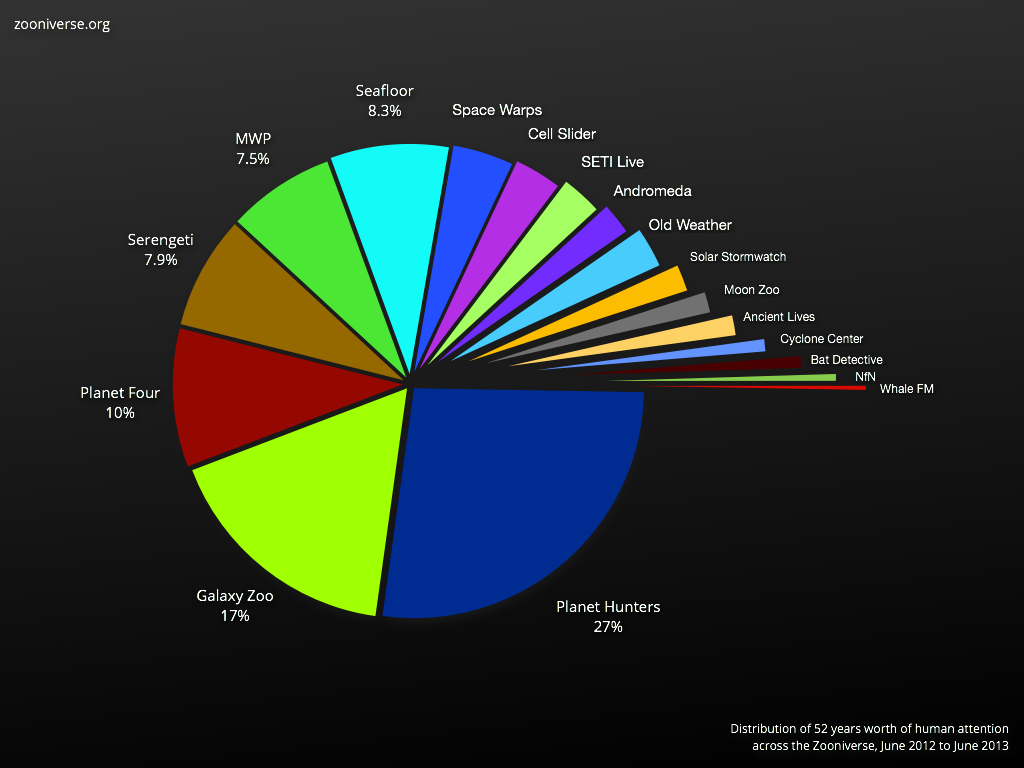
Image Credit: Rob Simpson/Zooniverse
Rob mentioned Snapshot Serengeti which provides BushCam images for you to identify the animals in view and what they are up to. This project has been very popular and from the quick visit I’ve made since returning from Oxford I can see how it could be almost as addictive as marking fans on Planet Four.
With the ‘formal’ part of ZooCon13 at an end we all retired to the nearest hostelry where, overlooked by a large oil painting of Patrick Moore, the workings of the universe were discussed long into the evening. My first ZooCon and hopefully not my last, everyone I met and talked to was friendly and keen to chat about all the workings of Zooniverse. Many have been coming to ZooCon for several years and it’s clear that many firm friendships have resulted. It was a pleasure to meet all of you and my thanks for the warm welcome to the fold you all gave me.
6 Months of Planet Four

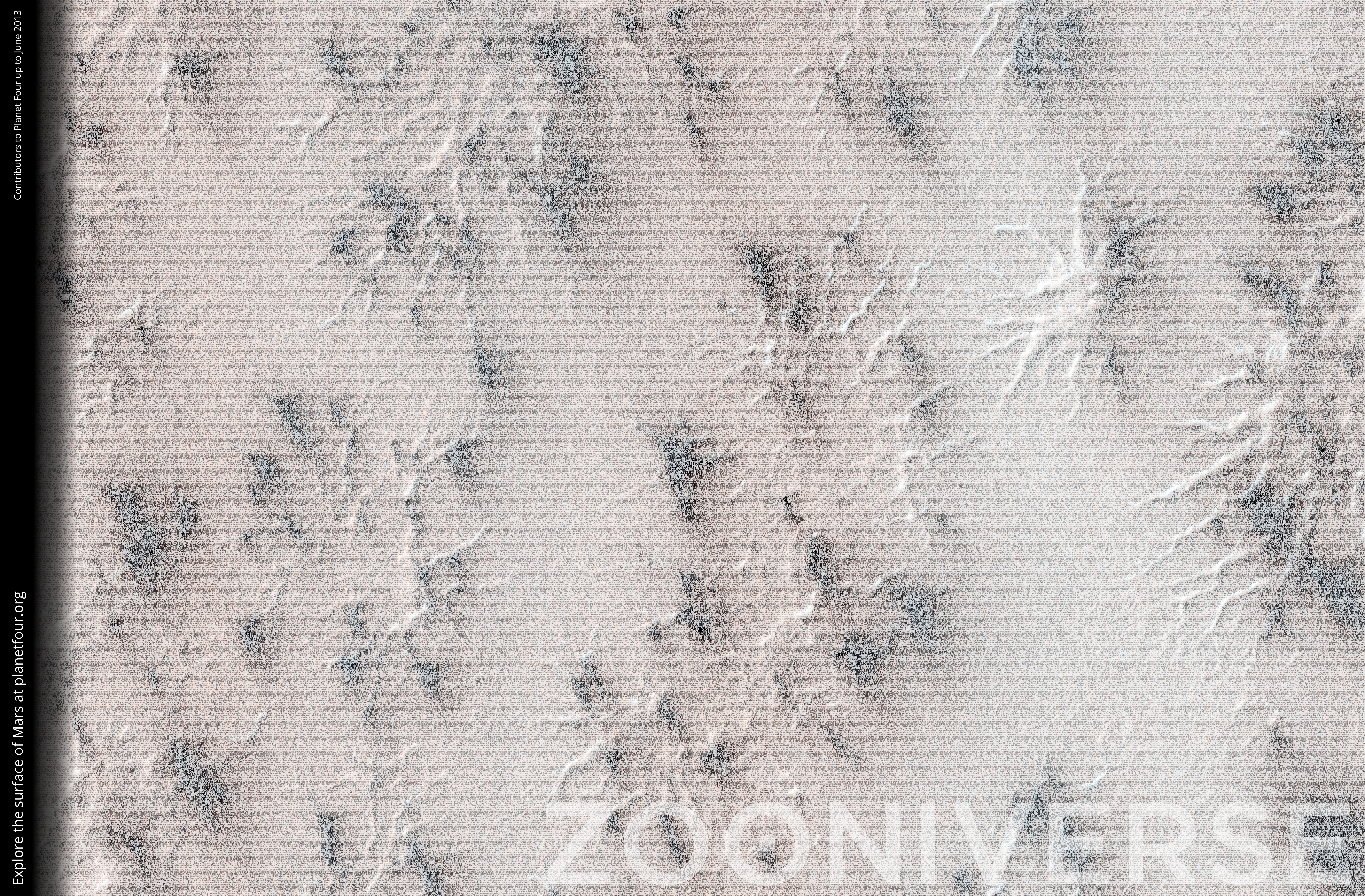
To celebrate Planet Four turning 6 months old and thank you for all of your hard work, we’ve made this poster [21 MB download] (and smaller resolution version 6.5 MB) containing the names* of the more than 72,000 volunteers who have contributed to Planet Four! We hope you enjoy it, and that you are able to find your name in amongst the many that make up this HiRISE image of dark fans and spiders (You can find the original image here). Here’s to the next 6 months!
*Names are only shown for volunteers who gave permission for us to show their name on the Zooniverse account settings. To update your settings login to https://www.zooniverse.org/account and update the ‘name’ field.
Save the Date: Planet Four Live Chat
June marks Planet Four’s 6th month anniversary, and to celebrate we’re having a live chat with the Planet Four science team on June 7th (next week!) at 7pm BST/6pm GMT/2pm EDT/11am PDT .Join us here on the blog to watch the live video feed.
We’ll be joined by Planet Four PI Candy Hansen (PSI) and science team members K.-Michael Aye (UCLA), Ganna (Anya) Portyankina (University of Bern) and Meg Schwamb (Yale). We’ll be talking about the latest Planet Four news and science as well as answering some of your questions. Send us your questions for the Planet Four team, either by leaving a comment here on the blog or by tweeting us @Planet_Four
Update: You can watch the live stream and the recorded video of the chat here.
Brand New Images – Year 1 Data
Today we have a post by Dr. Candice (Candy) Hansen, principal investigator (PI) of Planet Four. Dr. Hansen also serves as the Deputy Principal Investigator for HiRISE (the camera providing the images of spiders, fans, and blotches seen on the site). She is also a Co-Investigator on the Ultraviolet Imaging Spectrograph on the Cassini spacecraft in orbit around Saturn. Additionally she is a member of the science team for the Juno mission to Jupiter. Dr. Hansen is responsible for the development and operation of JunoCam, an outreach camera that will involve the public in planning images of Jupiter.
Wow – I just checked Planet Four and found that we had passed 70,000 participants; 70,334 to be exact, as of today. Thank you all for your many hours of hard work (and fun!).
To keep our most dedicated folks going we’ve added the first year of Mars Reconnaissance Orbiter operation (Year 1) to the image collection, although we are not quite finished with Year 2 and Year 3. We started with Year 2 and Year 3 mainly because we were much better at picking good locations and configuring the camera properly. Year 1 is a little more challenging, but interestingly the spring was also rather different from that of the subsequent years. Just like on Earth in some years we have more severe winter storms than others.
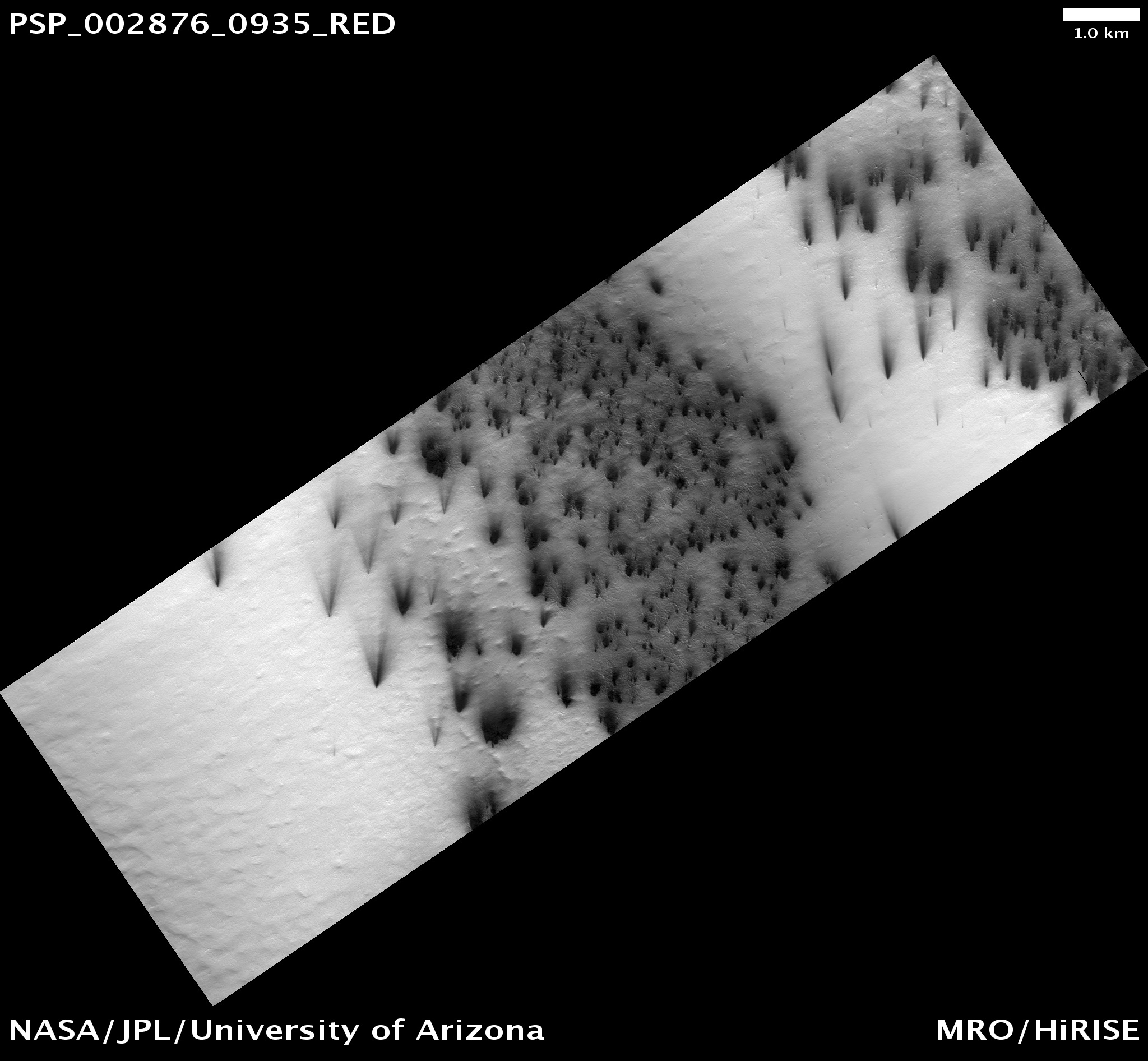
Region dubbed Manhattan thawing in Year 1 – You can find more about the observation at http://hirise.lpl.arizona.edu/PSP_002876_0935
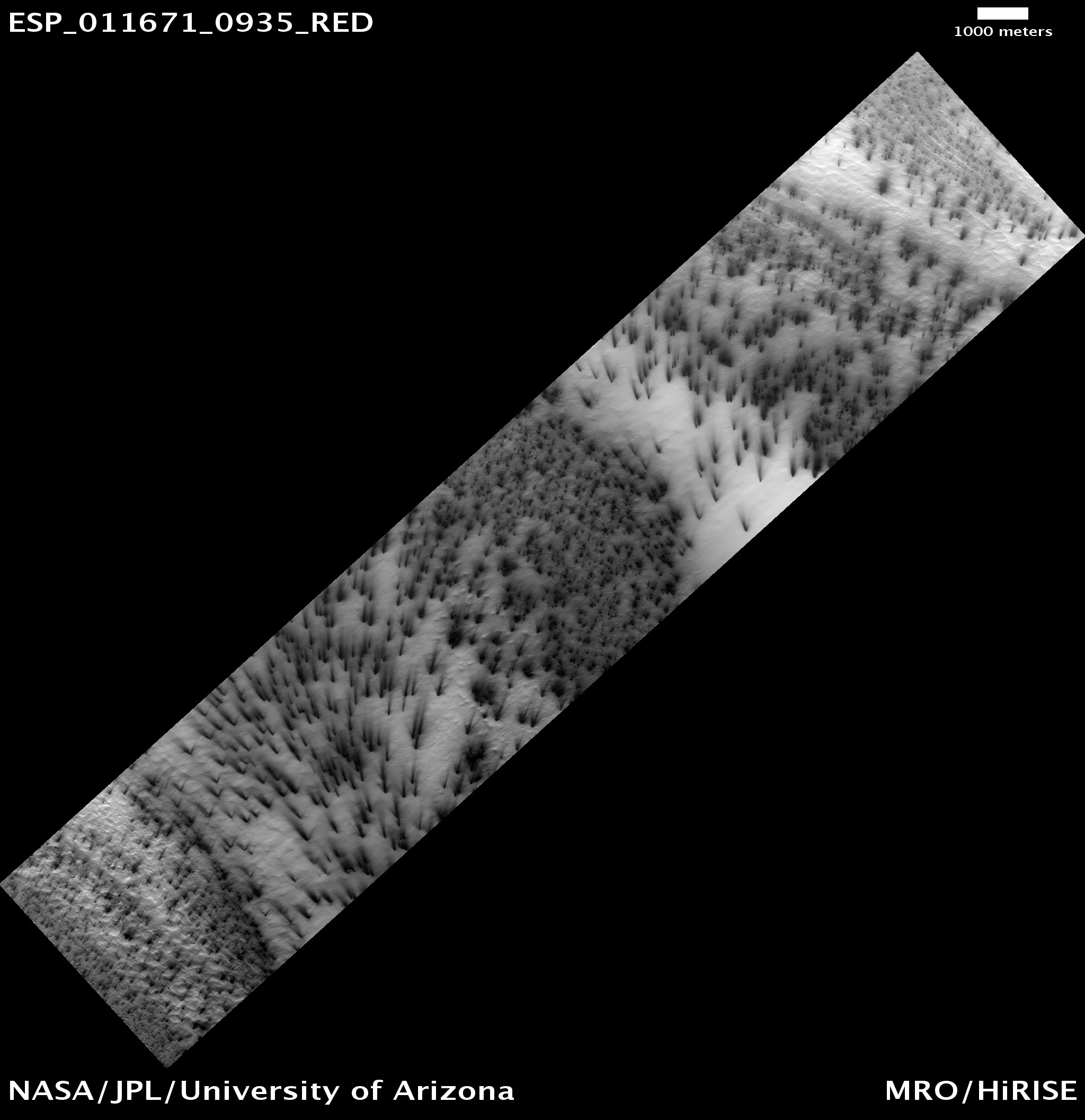
Manhattan defrosting in Year 2. Many more fans than appear in Year 1. You can find more about the observation at http://hirise.lpl.arizona.edu/ESP_012739_0935
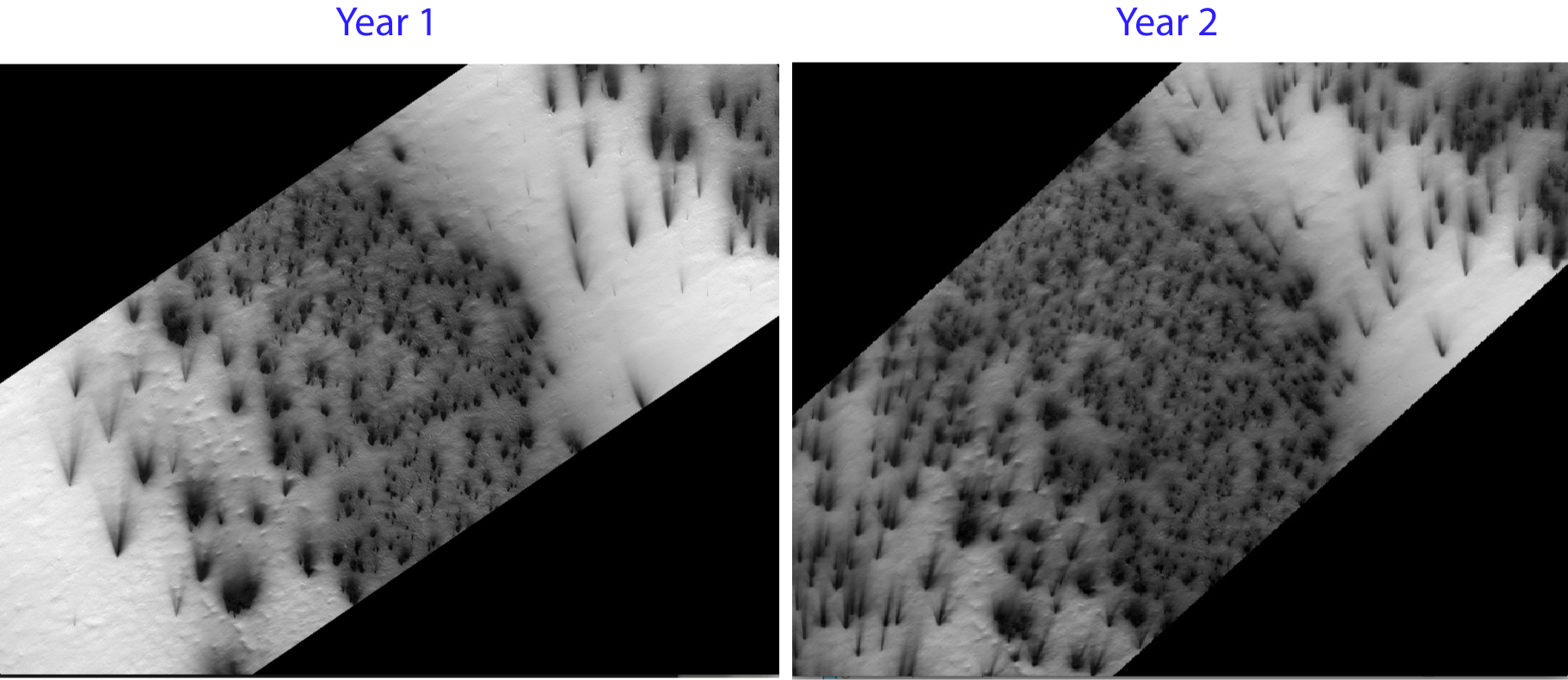
Same region aligned roughly in Manhattan to compare defrosting in Year 1 to Year 2.
In this case it appears that there was more frost and ice in Year 1 than Year 2 or 3, but it could also be that it just warmed up earlier in the latter years. So give it your best effort because I think the results will be fascinating.
In the meantime we are busy with our part of the task – digesting all of your measurements and figuring out what they are telling us about Mars. Sometimes I feel like we aren’t holding up our end of the bargain, but then again there are just four of us, and over 70,000 of you!
As you can see from Meg’s post, NASA HQ has taken notice of this effort. I reported on the Planet Four experience at our last HiRISE team meeting and a number of my colleagues were excited about other potential citizen science projects. Go Zooniverse!
Help us understand how Year 1’s weather and climate differs from Year 2 and Year 3 by mapping the fans and blotches on the new never-before-seen images on Planet Four today.
A Message from the PI
Today we have a post by Dr. Candice (Candy) Hansen, principal investigator (PI) of Planet Four. Dr. Hansen also serves as the Deputy Principal Investigator for HiRISE (the camera providing the images of spiders, fans, and blotches seen on the site). She is also a Co-Investigator on the Ultraviolet Imaging Spectrograph on the Cassini spacecraft in orbit around Saturn. Additionally she is a member of the science team for the Juno mission to Jupiter. Dr. Hansen is responsible for the development and operation of JunoCam, an outreach camera that will involve the public in planning images of Jupiter.
Dear Citizen Science Colleagues,
I have been lurking on the chat pages and reading your comments and thoroughly enjoying this whole experience. It is hard to believe that just last December Arfon and I were still drawing diagrams on napkins. Now we have a Zooniverse project underway!
Anya and Michael and I have been discussing this project for several years; Meg and I actually discussed this concept when she was still a graduate student. We were always daunted by the sheer amount of image processing we would have to do.
So now with all of your help we will be able to move forward. The spring season on Mars is a very non-terrestrial experience, as you have seen as you’ve looked at the images. The channels we see carved in the surface are there because the dry ice seasonal polar cap goes directly from solid to gas, and that pressurized gas erodes the surface. The eroded surface material is carried up out onto the surface of the seasonal ice and is deposited in the fans that you have been identifying and measuring.
We want to learn more about this unearthly process, so with your help we will now be able to calculate our first result – the number of fans that erupt as the spring goes by. The overall number of fans as time passes records the level of activity as the overlying ice thickness and level of sunlight changes.
Our objectives that are associated with understanding the weather in the spring will take longer to tease out. We will keep you posted as we make progress.
When an image cutout has been reviewed by 100 people it is retired. At this point you have completed the analysis of 34% of the 42,903 image cutouts. 75% of the cutouts have been reviewed by more than 50 people.
You have been analyzing images from the second and third spring seasons observed by the Mars Reconnaissance Orbiter. We will have images from the first spring ready to go soon, and those from year 4 in another month or two.
We have ideas for other projects – we hope you will continue to enjoy working with us. Your effort and enthusiasm are really an inspiration to us!
Sincerely,
Dr. Candice Hansen
More on Planet Four
Greetings Earthings,
Hi, I’m Meg Schwamb a postdoctoral fellow at Yale University and member of the Planet Four Team. The response from BBC Stargazing viewers has been amazing and we want to thank all of you for participating in the project. Thanks for helping us explore the surface of Mars and study the seasonal processes ongoing on the fourth planet from the Sun.
The images we’re asking you to classify come from HiRISE (High Resolution Imaging NASA’s camera on NASA’s Mars Reconnaissance Orbiter (MRO). MRO has been orbiting Mars since late 2006. HiRISE is a high resolution camera that is capable of seeing features the size of a dining room table on the surface of the Red Planet. This camera has been giving us the most detailed images of Mars that we can use to study how the surface changes with differing seasons and explore the geology of Mars from orbit. In addition MRO has helped keep rovers like NASA’s Curiosity ad Opportunity safe, with the capability to identify large rocks at potential landing sites that could damage a rover during landing.You might already be familiar with HiRISE images. MRO and HiRISE caught Curiosity on August 5, 2012 in the act as it was parachuting down to the surface to it’s future home at Gale Crater.
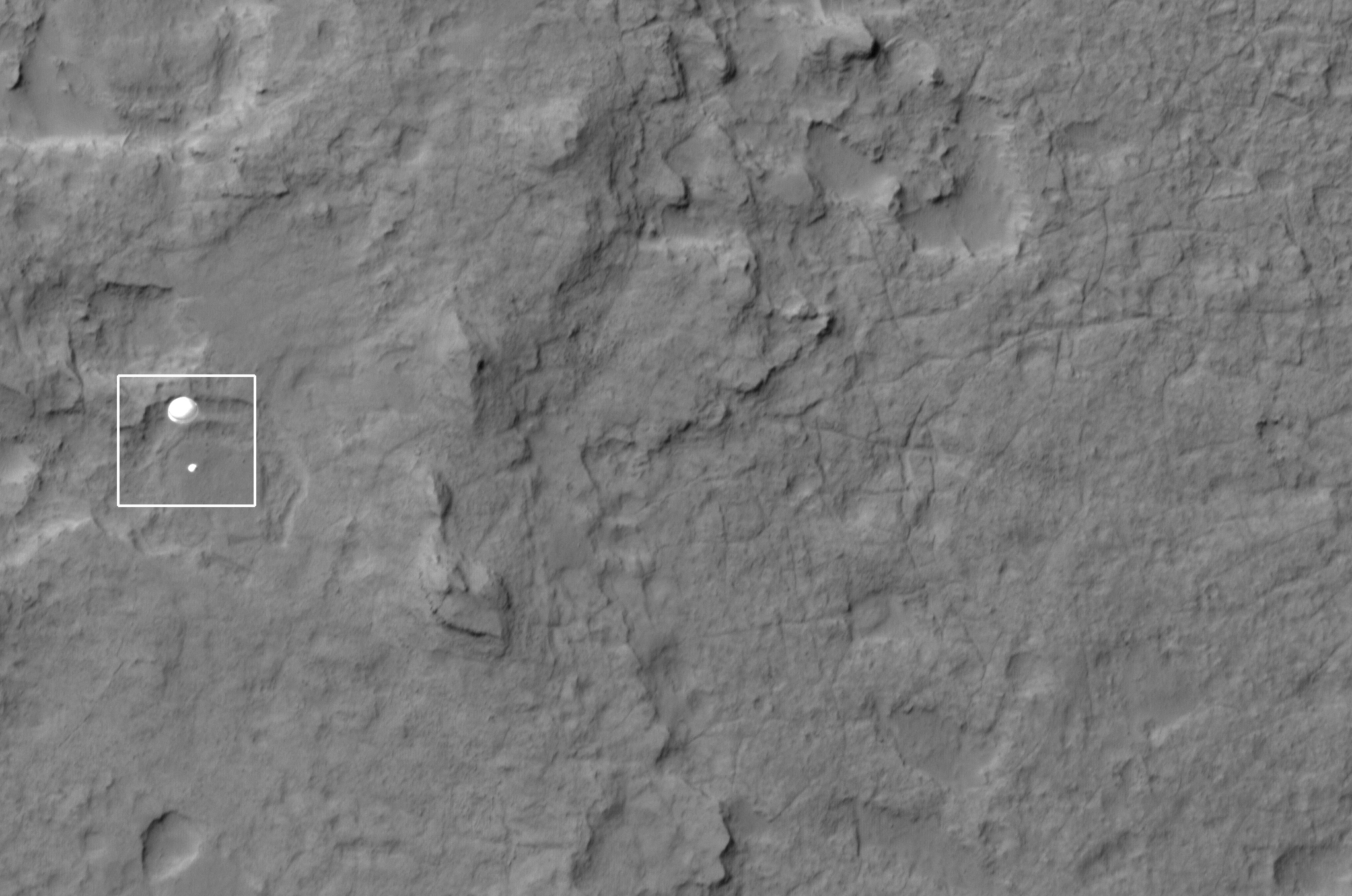
NASA’s Curiosity parachuting to the surface of Mars imaged by HiISE and MRO Image Credit: NASA/JPL/Univ. of Arizona
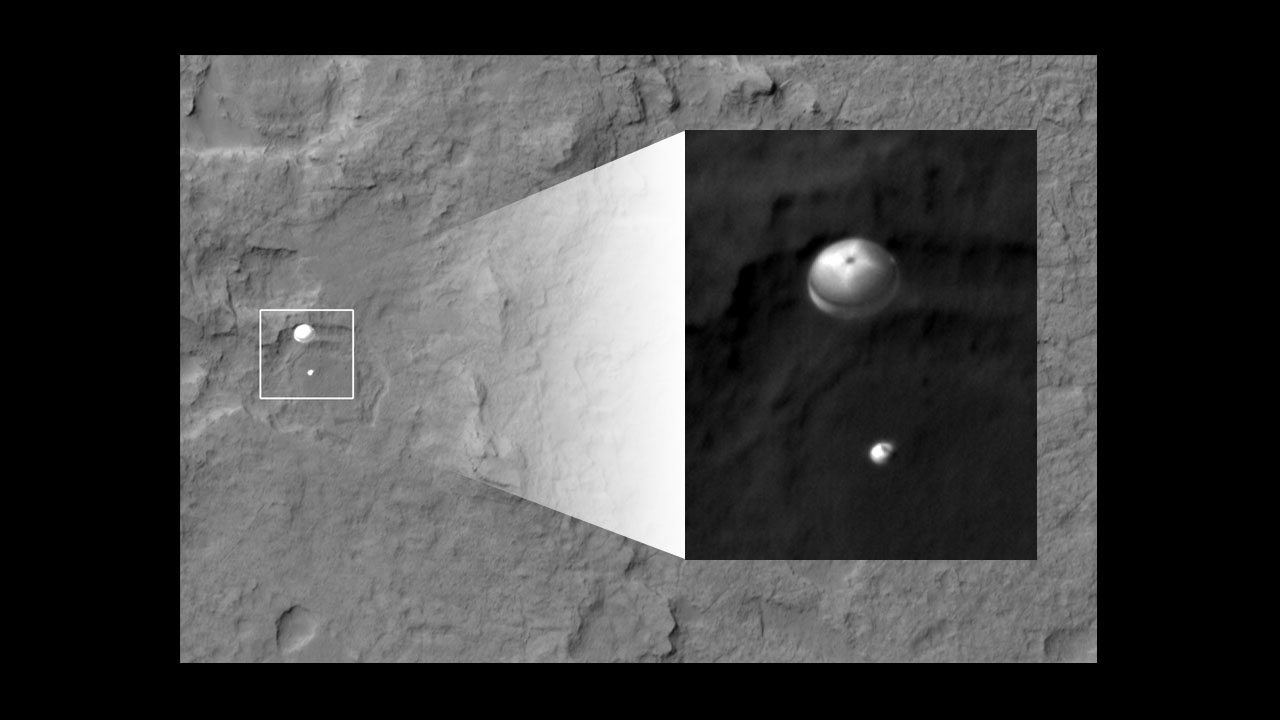
Zoom in of Curiosity descent Image Credit: NASA/JPL/Univ. of Arizona
On Planet Four, you’re seeing images of the South Pole of Mars. We are asking you to mark these beautiful dark fans and dark blotches that appear and disappear during the Spring and Summer on the South Pole of Mars. During the winter carbon dioxide (CO2) condenses from the atmosphere onto the ground and forms the seasonal ice sheet. The ice begins to sublimate in the spring, and the seasonal cap retreats. There we see over the Martian spring and summer these dark fans and blotches. They begin to appear in the Southern spring when the ice cap begins to thaw and sublimate back into the atmosphere. The fans and blotches then disappear at the end of the summer when there is no more ice left.
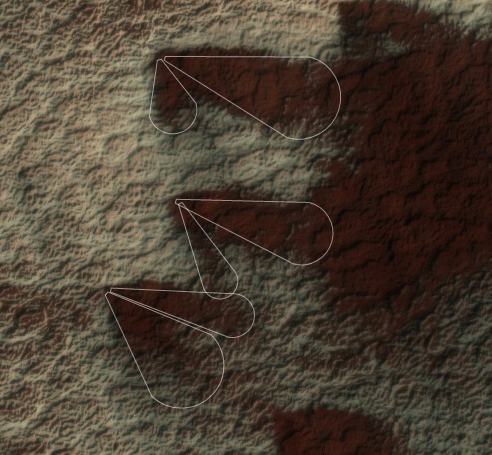
Seasonal fans marked in the Planet Four interface
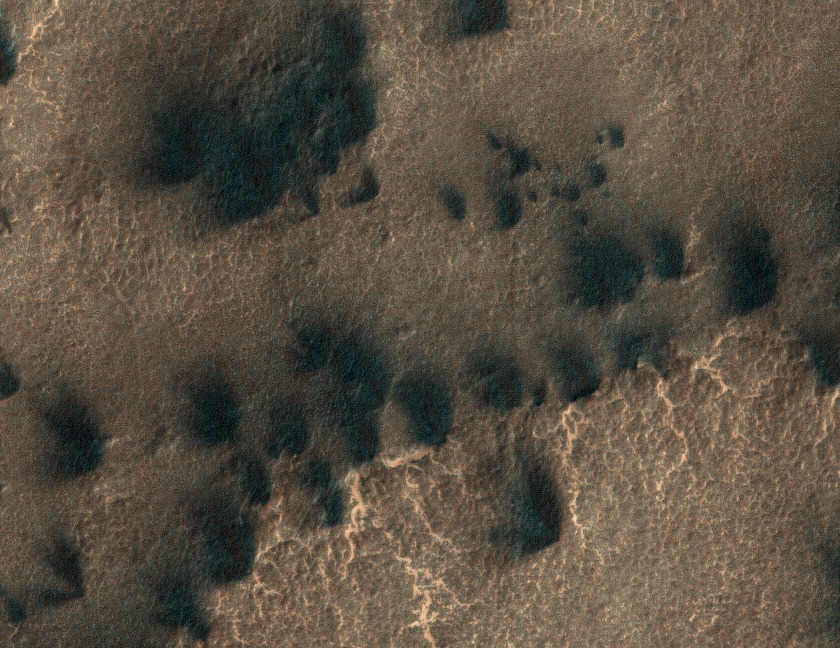
More fans and blotches
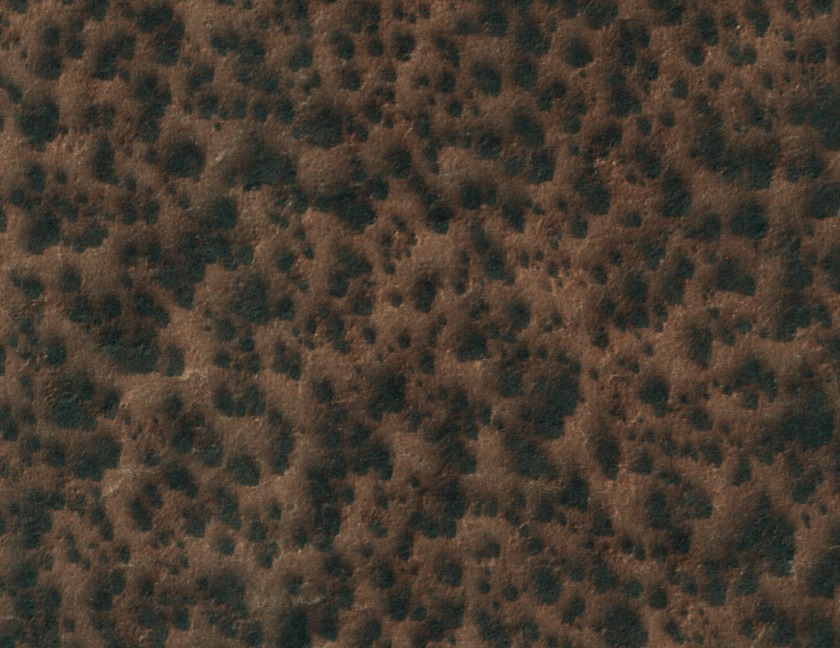
More fans and blotches
Later in the spring/summer season as the ice thins that we see these channels have been carved in the surface. Many originate from a single point and radiate outward. Others just like a patches of swiggly lines crisscrossing or in orderly rows. Those ridges are channels in the soil that are sculpted by carbon dioxide gas. These veins in the images are what we call “spiders” or araneiform terrain.
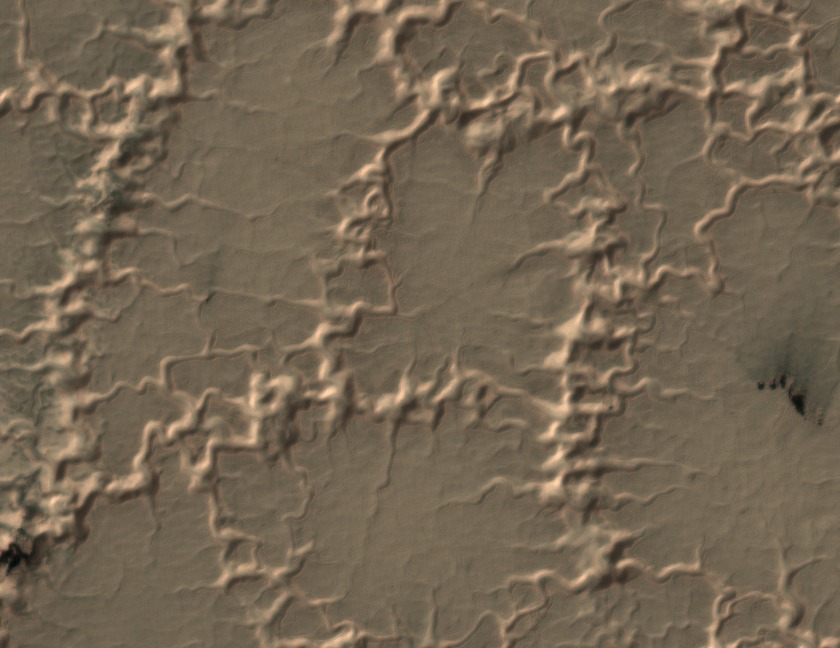
spiders-like or araneiform terrain with channels carved by carbon dioxide gas
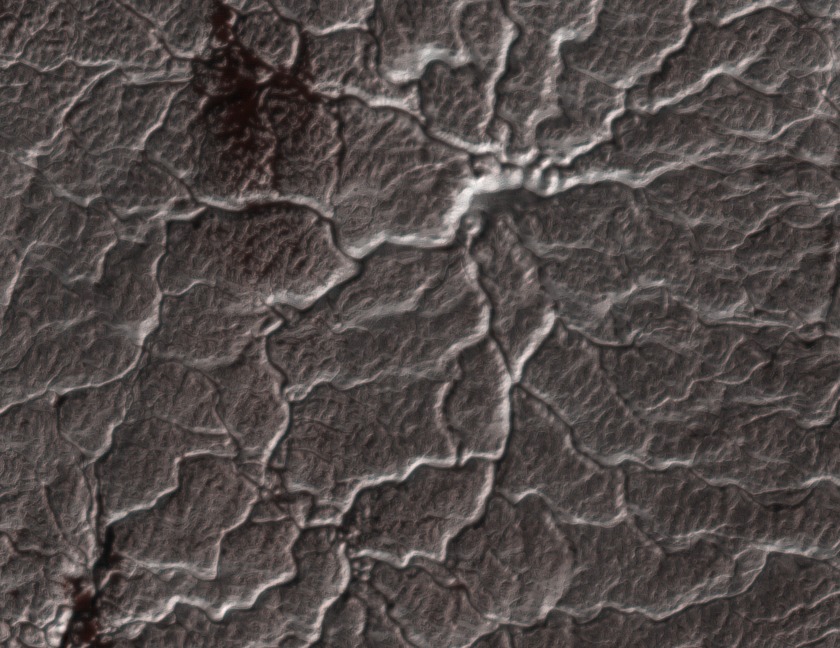
spiders-like or araneiform terrain with channels carved by carbon dioxide gas
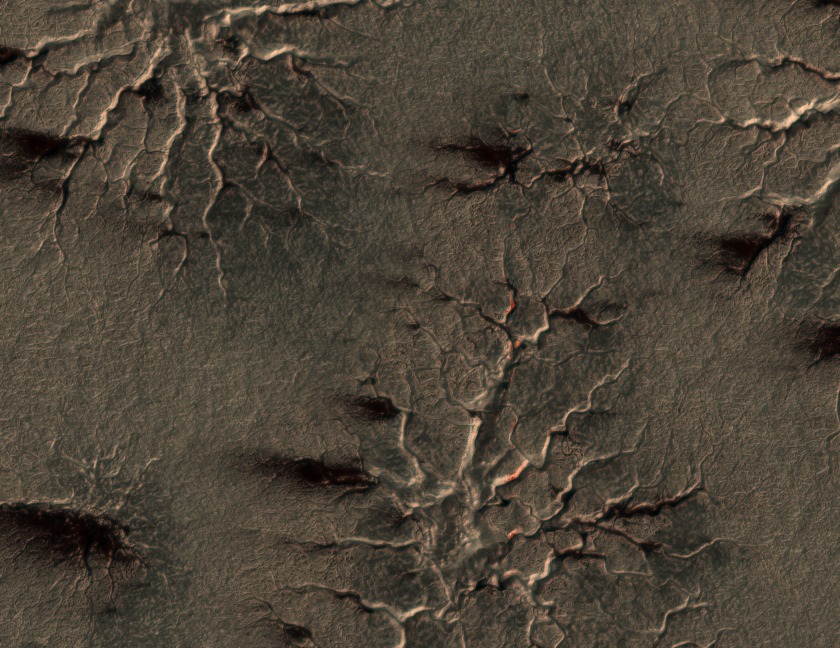
spiders-like or araneiform terrain with channels carved by carbon dioxide gas
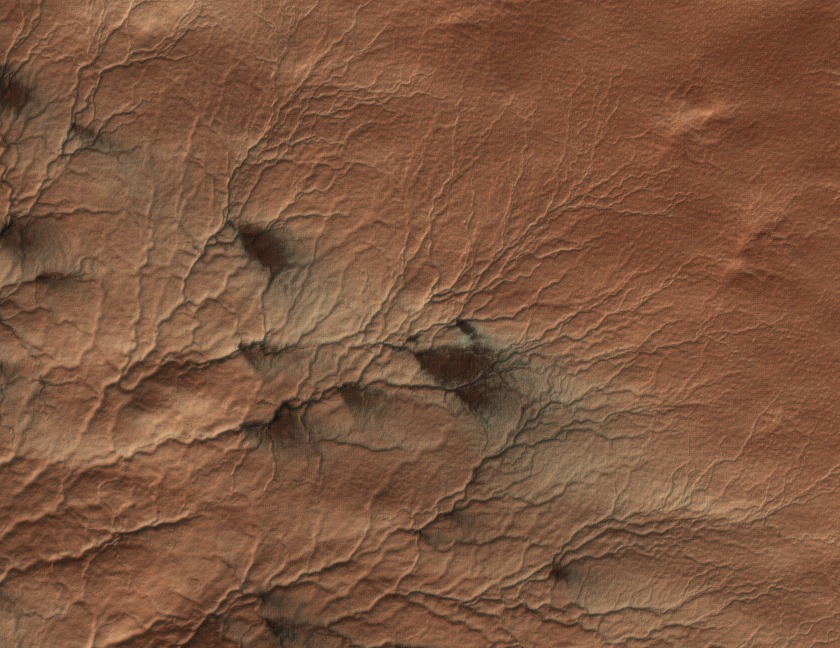
spiders-like or araneiform terrain with channels carved by carbon dioxide gas. Here you can see there are some fans that appear to be originating from geysers that develop in these channels
Here’s how we think they form: In the spring/ summer when the sun come up the sun heats the base of the ice sheet the ice sublimates on the bottom creating carbon dioxide gas that carves these channels or spider-like features. The trapped carbon dioxide gas is rushing around the bottom carving these channels and tries to exploit any weaknesses in the ice sheet. If it can the gas propagates through cracks in the ice sheet the gas escaping into the atmosphere in geysers. The gas bringing along dust and dirt to the surface that we think get blown by surface winds into the beautiful fans we ask to mark or if no wind the blotches we ask you to map. This morphological phenomenon is unlike anything seen on Earth. You can learn more about all of this process we think is happening on the surface in our previous blog post.
We want to study how these fans form, how they repeat from Spring to Spring and also what they tell us about the surface winds on the South Polar cap. We only have very few limited wind measurements from spacecraft we’ve landed on Mars. If the fans are places where the wind is blowing, then they tell us the direction and the strength of the wind. Blotches then tell us where there is no wind.Your mapping of the fans and blotches would help provide largest surface wind map of Mars.
Over 10,000 participants worldwide have helped classify 340,052 MRO images. But we still need your help. There are many more images still waiting to be mapped. Help us out at http://www.planetfour.org/ today.
 Planet Four Blog